
Best Beginner Camera for Newborn Photography: Complete Guide
This post contains affiliate links. If you buy through them, I earn a commission at no extra cost to you.
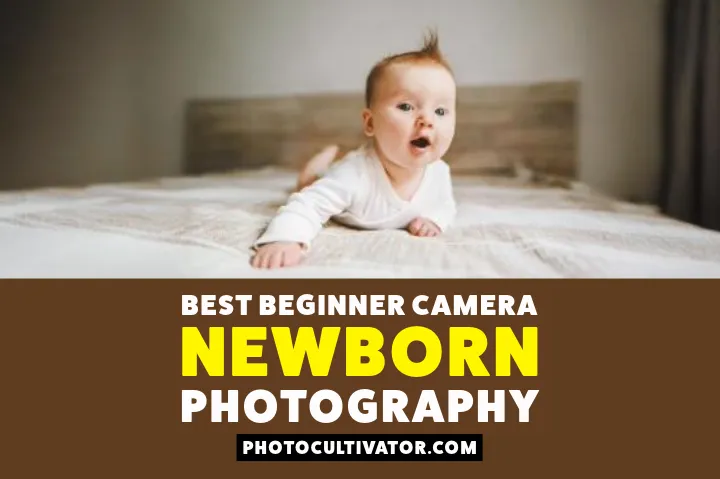
You have a newborn and a phone that struggles in a dim nursery. These first weeks deserve better than grainy phone shots, and you do not need a photography background to get there.
Check out my best cameras for beginners guide to learn more.
The Most Important Thing to Know Before You Buy
Most first-time buyers focus on autofocus specs and burst rates. For wildlife or sports photography, those matter. For the newborn stage, they point in the wrong direction.
For the first several months, a newborn barely moves. Autofocus tracking is not the constraint. Light is. A nursery is significantly darker than most phones can handle, and that gap is what turns intended sharp photos into soft, blurry, noisy ones.
The single most important purchase for the newborn phase is a fast prime lens with a wide maximum aperture (a low f-number). A wide aperture gathers more light, letting the camera work in dim rooms without flash. A lens wide open at f/1.8 admits nearly 4x more light than the f/3.5 end of a typical kit lens, roughly two stops. That is the difference between a keeper and a throwaway.
The body matters, but the lens determines whether your photos actually work in a dim nursery.
Your Starter Kit
The Olympus OM-D E-M10 IV paired with the 25mm f/1.8 prime lens is the recommended kit.
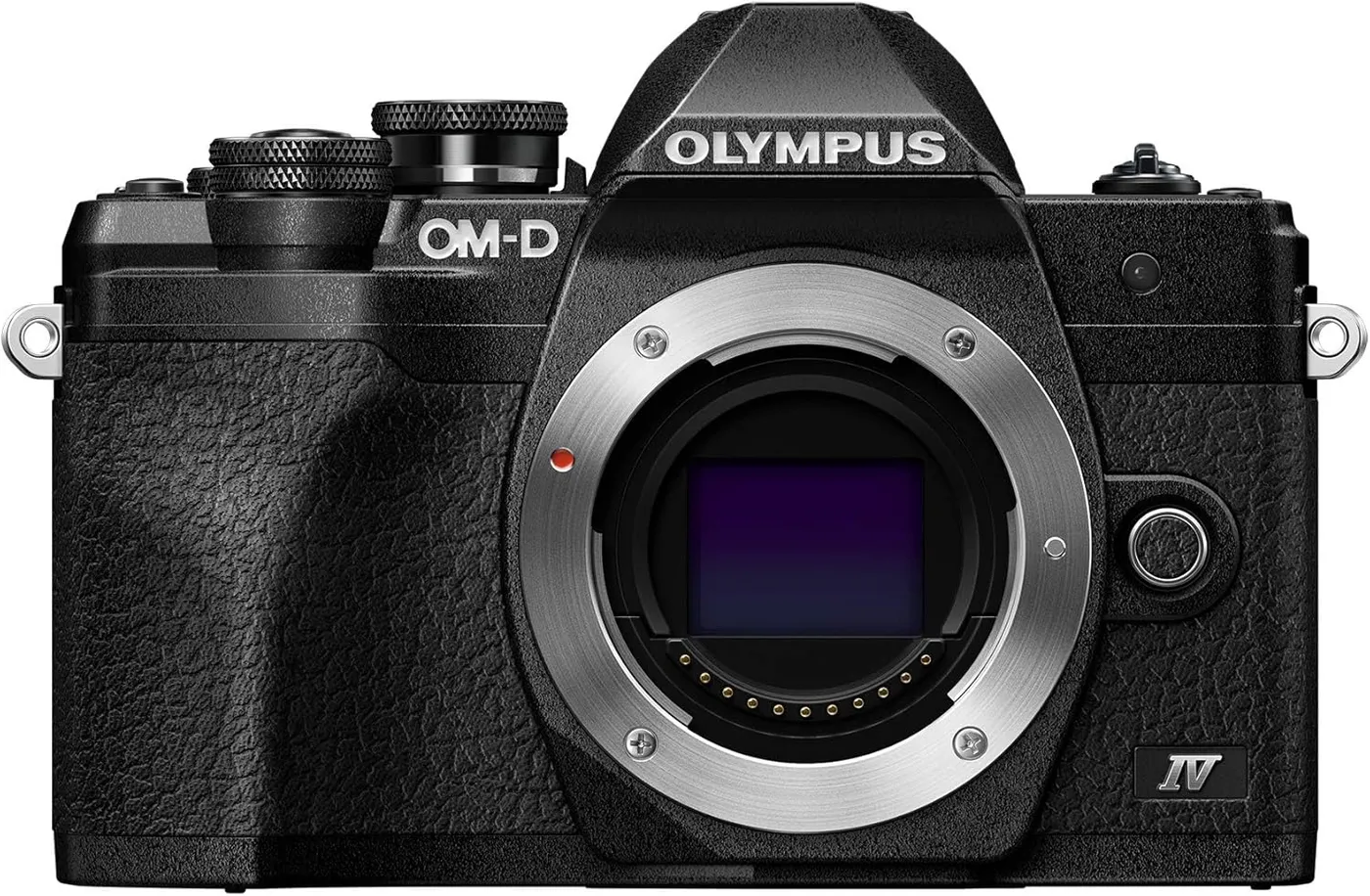 The Olympus OM-D E-M10 IV: compact, quiet, and stabilized for newborn photography.
What to buy and why:
- Olympus OM-D E-M10 IV body: compact, silent, and stabilized. About $700 new. Handles dim nursery light without flash and fits in one hand.
- M.Zuiko 25mm f/1.8 prime: the most important item on this list. About $400 new. The f/1.8 aperture is what makes nursery shots work; the focal length covers both close-up details and full-body shots.
- 2x 64GB SD cards: one in-camera, one as a spare. Losing a session to a corrupted card is avoidable.
- Second BLS-50 battery (optional): the body ships with one BLS-50. A second is handy for longer days but not needed to get started.
Budget: Body and lens together run about $1,100 new. Buy both used and you can land comfortably under $1k. See best places to buy used photography gear for reliable marketplaces.
Why This Camera Works for Newborns
The E-M10 IV’s features align directly with what makes newborn photography challenging.
Key Features
- Silent shooting mode that won’t disturb sleeping babies
- Powerful 5-axis image stabilization for sharp images in dim nursery lighting Learn more about in-body image stabilization (IBIS)
- Lightweight design, easy to hold while also holding a baby
- Intuitive controls for focusing on the moment
Professional newborn photographers typically shoot between f/2 and f/4 for that signature soft, gentle look, and this camera handles that range without compromise.
New to mirrorless cameras? My DSLR vs mirrorless cameras guide explains what the differences mean in practice.
The Lens Question
Why the Lens Is the Key Investment
While the camera body opens the door, lens choice has a greater impact on the images you actually get. My camera lens upgrade guide for low light explains why.
Essential Lenses for Newborn Photography
For parents photographing their own baby, one well-chosen fast prime covers nearly every situation. A dedicated macro lens is a nice-to-have for extreme close-ups of tiny fingers and toes, but for day-one use it is not essential.
The Olympus 25mm f/1.8 Advantage
- Its focal length suits both intimate details and full-body shots
- The wide f/1.8 aperture performs excellently in low light
- Fast, accurate autofocus captures fleeting expressions
- Close focusing capability captures essential details
One Body, Two Lenses
Autofocus is important and this lens delivers it well. The E-M10 IV’s tracking and burst capability live in the body, so they are available right now. Pair the 25mm f/1.8 for nursery shots and swap in the Olympus M.Zuiko 40-150mm for a toddler on the move or a casual track day: same camera, two lenses. For a hobbyist, the E-M10 IV handles action well. It is not a pro sports tracker, and if action photography becomes your main interest, the body is the component you would upgrade. For a closer look at what separates entry-level and pro action bodies, see cameras for low-light performance photography.
Megapixels Are Not the Whole Story
Twenty megapixels is enough for a sharp 16x20-inch print with room to crop. What actually determines image quality in a dim nursery is sensor size and lens aperture. A larger sensor captures more light per pixel; a wider aperture delivers more light to the sensor. More megapixels squeezed onto a small sensor do not help in low light.
The E-M10 IV’s Micro Four Thirds sensor paired with the f/1.8 prime is the combination that matters here.
Video
The E-M10 IV shoots 4K video. Combined with the 5-axis stabilization and the fast prime, it produces smooth, well-lit handheld video without a separate gimbal. First steps, birthday candles, backyard moments: one kit handles all of it.
Working With Available Light
Natural window light is the best light for newborn photos. A sheer curtain diffuses direct sun into something soft and even. A white blanket or foam board propped nearby reflects fill light back onto the baby’s face.
Avoid on-camera flash. It startles sleeping newborns and flattens the warmth of the image. The f/1.8 lens paired with the stabilized body is designed for available-light situations.
Protecting Your Gear
A basic gear insurance policy covers accidental damage and theft. See my best camera insurance for photographers guide for what to look for, and camera gear storage and protection tips for keeping the kit safe at home.
Beyond the Gear
Professional photographers emphasize that success in newborn photography relies more on skill than on equipment.
Essential techniques
- Working with natural window light
- Practicing silent movements around sleeping babies
- Mastering low-light capabilities
- Understanding composition principles
And That’s It
This kit gives you everything you need to move past the phone and start making images worth printing. The compact body, silent shutter, and bright prime handle the specifics of a dim nursery and a sleeping baby better than any more expensive alternative.
For a complete overview of photography basics, visit my ultimate photography guide for beginners.
I hope that helps,
Hakan.
Founder, PhotoCultivator.com